A recent GfK NOP Technology report shows consumers’ love affair with mobile phone applications has turned from a dalliance into a settled and dependable relationship. With a fifth of smartphone users downloading more apps than six months ago, mobile applications may soon replace browsers as the main gateway to the web for mobile phone users.

To read the full GfK NOP Technology report click here

  • Share/Bookmark

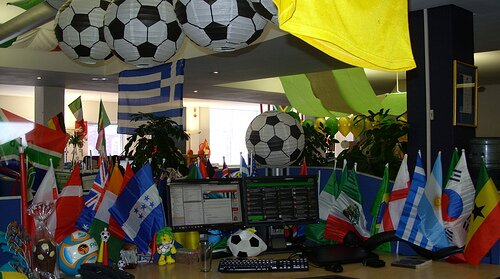
The FIFA World Cup is finally upon us and while football fans, vuvuzelas aside, have been enjoying the first week of games, employers have a difficult decision to make when it comes to England’s game against Slovenia on Wednesday 23 June at 3pm UK time. Passionate debates about football are all too common, but there is one debate that takes place every four years – namely whether employers should give their staff time off to watch their national team play in the World Cup.

GfK data shows that 5% of employees are going to be allowed time off or be granted flexible working hours to fit around England’s match against Slovenia (this includes GfK NOP). Although this seems fairly small it still shows that employers are willing to let their staff take time off because of a football fixture. Most companies will doubtless have already made their decision regarding their position on this matter, but for the few remaining who are yet to make an official announcement, we would urge that they give the go ahead to watch the match.

Employers allowing their staff to watch the game or arrange flexible working around it will not only have made the correct decision for their football loving employees, but more importantly they have made the correct decision for their business. GfK data shows that 78% of staff allowed to watch the game away from their desk will feel more positive towards their employer, with 68% of the same group also saying that they feel more motivated to work during a World Cup.

Employers may lose their headcount for what will effectively amount to a full afternoon, but the benefits from doing so will help to keep their workforce engaged during June and July this year: employers allowing their staff to watch the game will be rewarded with a motivated and productive workforce whilst positively enhancing their image as an employer.

Conversely, our survey data shows that not allowing time off may have a negative impact on a business – 20% of employees not being given time off to watch the game say they now feel more negatively towards their employer, and  17% of respondents state they will feel less motivated as a result of the decision. Furthermore, the majority of those not allowed are likely to be watching the game anyway – the growth in streaming live content through the internet means that watching the match at work is really only a few clicks away. For the 7% of employees who are not allowed time off work  this could be an option that has previously been impossible.

A lot has been made about employees streaming the action from South Africa through their PC or mobile device and crippling the networks within their office walls. So much in fact that FIFA has installed 75 supercomputers in the town of Slough to cope with increased data usage*. The precautions taken by FIFA may not be fully justified as GfK data shows that 23% of those not granted time off work will be listening to live radio commentary while streaming via PC and mobile will only account for 9% and 3% respectively.

With companies already having taken a stance on the issue of the World Cup it is clear to see that those employers officially allowing their staff to watch the game will reap the benefits for the business in the long term and boost company loyalty.  It’s really a no-brainer – although whether people actually want to watch the match following England’s terrible performance against Algeria is less of a certainty…

* Sources for used figures & quotations:

http://www.techradar.com/news/internet/fifa-houses-75-supercomputers-in-uk-for-world-cup-693600

RESEARCH NOTES:

GfK NOP Technology conducted a survey among 996 UK adults in June 2010. The interviews were conducted online and are representative on UK adults who have access to the internet.

Image From:

http://www.flickr.com/photos/shine2010/4615577330/

  • Share/Bookmark

Growth returns to Western European consumer technology markets in Q1 2010. GfK TEMAX data shows that consumers are more willing to upgrade their home technology as well as experiment with new smartphone mobile technology.

GfK TEMAX data shows that, overall, the consumer technology market recorded 2.7% growth in Q1 this year compared to Q1 in 2009. Key technology sectors have recorded year on year growth, including Telecommunications (+4.9%), Information Technology (+3.6%) and Consumer Electronics (+0.7%) in Q1 2010. Smartphones, Windows 7 and LCD TVs are all driving factors of growth in their respective sectors.

Smartphones continue to drive growth in the Telecommunications market

While the telecommunications market declined by -3.2% in the fourth quarter 2009, the first quarter of 2010 returned to growth with a +4.9% increase year on year.

Growth in the telecommunications sector is being driven by the increasing demand for Smartphones as they make up 40% of the total sales value. In Western Europe one in five handsets sold runs a mobile operating system and uses a touchscreen or QWERTY keyboard as an input interface. Mobile Operating Systems include Symbian 60, Windows Mobile, Linux, Android, iPhone OS, RIM and Palm WebOS.

Internet access has become “ubiquitous” which is driving interest in mobile services to a much broader audience. Mobile email is becoming the alternative to the well perceived SMS services and navigation software often come pre-installed on the devices. Social networks have become the most popular apps on smartphones, adding more relevance and immediacy the PC at home. Furthermore, many of these mobile operating systems are also being used on netbooks and tablet PCs, which are being sold through network operators with 3G connectivity.

With a wide range of innovative, new smartphones showcased at the Mobile World Congress earlier this year and the recent interest in tablet PCs, growth in the telecommunications sector is likely to continue throughout 2010.

Windows 7 ignites upgrade cycle in the Information Technology market

The Information Technology market, the second biggest market behind Consumer Electronics in Western Europe, grew by +3.6% in Q1 2010 and is now worth EUR 11.5 billion.

Consumer demand is focusing on Mobile Computers, but also on accessories, peripherals, software and especially All-In-One-Desktop Computers too. The successful introduction of Windows 7 initiated a new replacement and upgrade cycle. Lots of consumers leapfrogged Vista, staying with existing installed hardware, software and even accessories and peripherals. Overlooking Vista led to many installed products being outdated upon the arrival of Windows 7, thus consumers were “ready” for an update. As consumers are becoming more aware, they are looking for a wide product range. As a consequence expectations for 2010 are positive following this trend in consumers’ attitude.

Strong demand for LCD-TV’s returns growth back to the Consumer Electronics market

Consumer Electronics, the largest technology sector in Western Europe, recorded year on year growth of +0.7% in Q1 2010. The impact of the recession on the Consumer Electronics markets no longer exists as demand for LCD TVs strengthens for three key reasons.

Firstly, most countries in Europe have a huge consumer demand for replacing the old CRT-TV with a new flat LCD-TV. Of course, the World Cup in South Africa is supporting this trend and quickening the desire to replace old TV sets. With the stabilisation of prices over the past months, the revenue situation also saw an improvement.

Secondly, the digital switch over is another contributing factor to the growth in this market. With analogue TV being phased out, new set top boxes or even a new TV set are required to receive digital TV channels. This development is most strongly observed in Spain (+16%), Italy (+6.9%) and Portugal (+4.4%). Home entertainment in general gained importance with better HiFi products or “TV ecosystems” becoming increasingly popular. Positive and substantial impulses were seen from Blu-ray, Home Theatre Sets, Loudspeaker Sets and of course High Definition set top boxes.

Finally, consumers’ willingness to invest in flat screens, HD and better sound systems for the home, is a clear sign of the “homing-trend”. This willingness-to-invest combined with the anticipated impact of the World Cup  gives reason to expect an even better second quarter 2010.

2010 consumer technology outlook is positive

In addition, GfK TEMAX covers other consumer technology sectors in Western Europe and all but one experienced growth. Other technology sectors that grew in Q1 were Photography (+2.7%), Major Domestic Appliances (+ 4.1%) and Small Domestic Appliances (+6.5%), but Office Equipment and Consumables sector contracted -1.2% compared to the same period in 2009.

These positive growth figures in Q1 are likely to continue throughout the year and Michael Sauter, head of GfK TEMAX, comments that:

“The first signs for April are looking positive. Our data show the Technical Consumer Goods market continuing on the road to recovery, indicating more growth to come in Q2-2010.”

Check back in July for the latest data and analysis from GfK TEMAX

ABOUT GfK TEMAX

GfK TEMAX® is an index developed by GfK Retail and Technology to track the consumer durables markets. GfK TEMAX® is published internationally. The findings are based on surveys carried out by the retail panel of GfK Retail and Technology. The retail panel comprises data from over 340,000 retail outlets worldwide. Click here for all reports and press releases

PHOTO COURTESY OF

http://www.flickr.com/photos/ndevil/

  • Share/Bookmark

Apple is a leading force in the smartphone market because they simplify services and enable people to fit their world in their pocket.

Yesterday, Steve Jobs announced the latest iPhone 4 at WWDC but what struck me was the way he structured his presentation. Jobs focused early on about the success of the App Store for both consumers and developers. There is now 225,000 apps available, 5 billion downloads and Apple has paid out $1 billion dollars to developers. Apple has created a vibrant market place for mobile apps and services with more big brands to launch later this year. That is success unrivalled by anyone.

To cover all this first was smart because Jobs was focusing on the services and the benefits of owning (or developing content for) an iPhone. After all the device features are becoming less important over time whereas services and content is increasingly driving consumer demand in the smartphone (as opposed to the feature phone) market.

Apple have understood this for years because nothing about the iPhone 4 is particularly new, multitasking, video calling, high resolution screens and cameras have been around for a while. Whilst other smartphone makers have focused on handset features Apple have focused on what the consumer can do with their phone. These are very different strategies and Apple has clearly chosen the right path.

The really clever thing that Apple does is the way they take old features, like multitasking, simplify them and re-package them as if they have just been invented for the first time. By making features like these easy to use, those who aren’t particularly tech savvy believe that Apple invented them. Apple did exactly this with Apps, they made them easily accessible, streamlined the purchase and installation process and most importantly made the content exciting and relevant. A recent tweet from Steve Jobs exemplifies this perfectly:

“No one used computers until Macintosh. No one listened to MP3 players until iPod. No one made video calls until iPhone 4″

However, unlike a few years ago, there are now many strong competitors to the iPhone. There are many Android based alternatives that offer tightly integrated services, varied apps and some argue better features. Nokia will be launching their revamped version of Symbian OS on the N8 and Microsoft will also be introducing Windows Phone 7 towards the end of 2010. Most importantly, however, the services are improving quickly and whilst they haven’t achieved the success of Apple’s App Store they are quickly gaining ground.

Despite all the buzz around the iPhone 4 not everyone can afford one. With many compelling alternatives at cheaper price points, Apple faces much stiffer competition than they have faced upon the launch of previous iPhones.

What do you think of the new iPhone 4? Will you be buying one?

  • Share/Bookmark

Expect to see a vibrant and competitive tablet PC market over the next 12 months as Apple sell 2 million iPads globally in less than 60 days.

Apple certainly knows how to get the media and public excited about their latest creation, the iPad. Everyone is talking about the iPad and tablet PCs and this is not just tech press but also mainstream news bulletins. Apple is extremely proficient at sparking people’s imagination around all the creative ways their products, iPhone and iPad, can be used. Apple’s famous strapline for the iPhone was “there’s an app for that” which creates a powerful perception that anything is possible, and the same applies on the iPad.

Whilst Apple have created an enormous buzz around tablet PCs and educated the market as to all the potential uses, competitors will be launching rival products to compete with Apple’s iPad. In the next 12 months we’ll see a plethora of tablet PCs launched from a number of different manufacturers, running a number of different operating systems, from Microsoft Windows to various open source based platforms such as Android and MeeGo (Intel and Nokia joint venture).

The tablet PC market will be a place where laptop manufacturers and smartphone providers really start to compete head to head. At the smartphone end of the market expect to see Nokia, Blackberry and HP (running newly acquired Palm OS) launch alternatives to the iPad. At the PC end of the market the first entrant will be the Dell Streak which will quickly follow the iPad launch in mid June. Asus and Lenovo also have tablet PCs in the pipeline, which will most likely be based on Windows 7. Google won’t be left behind and will launch either an Android or even a Chrome OS based tablet during the course of the year.

With all the different tablet PCs, consumers will be spoilt for choice. Looking at the main three operating systems, Apple mobile OS, Windows 7 and Android/Chrome OS, each company will take a slightly different approach which will add great variety for consumers. For example, Google will be pushing for more of a cloud-based solution, Apple will be heavily app and services based while Microsoft will be evolving their traditional Windows based platform that everyone is familiar with.

As tablet PCs become more popular the netbook market will take a further nosedive. In July 2009 the netbook market grew an astonishing 641% but in April 2010 it grew only 5%, a remarkable fall from grace.

So if netbooks fall victim to tablet PCs, who will benefit?

Well, the iPad was launched in the UK last Friday and today Apple announced that they have sold more than 2 million units globally. According to GfK NOP Technology research Apple are expected to sell up to 2 million 1st generation iPads in the UK if they can meet high levels of early demand. The pricing of the iPad varies and is available as Wi-Fi only models as well as 3G devices from the major UK operators. Apple will almost certainly occupy the more premium end of the market, with competitor tablets likely to be more cost effective. However, price is not the only determining factor for success. The provider who can package up content and services that make tablets easy to use and relevant to the consumer will be the ones who come out on top.

Apple has proven credentials when it comes to delivering multi-media services and apps to their users. They’re not standing still either as Apple launched the iBookstore on the iPad which has already sold 1.5 million ebooks in the US. But even in the services market, competition is strong. Expect to see compelling service offerings from Google, Nokia, RIM (Blackberry) and HP Palm, all of which produce excellent hardware and are quickly improving their services and access to vibrant market places for 3rd party apps.

If competitor tablets can get their service offerings right we can expect to see a very competitive and exciting tablet market in the next 12 months.

FURTHER READING

Apple struggling to cope with demand

http://technology.timesonline.co.uk/tol/news/tech_and_web/personal_tech/article7134564.ece

Operator tariff prices

http://www.guardian.co.uk/technology/2010/may/10/o2-reveals-ipad-data-plans

2 million iPads sold globally

http://techcrunch.com/2010/05/31/apple-sold-2-million-ipads-in-59-days/

RESEARCH NOTES

GfK NOP Technology conducted a survey among 1279 UK adults between 16th and 21st April 2010. The interviews were conducted online and are representative on UK adults who have access to the internet.

IMAGE SOURCE

http://www.flickr.com/photos/jliba/

  • Share/Bookmark