Posts Tagged ‘Network Operators’
16/08/2011 08:38 by Anna Parkinson

With increasing numbers of children using social networking sites, how do parents feel about their safety and is there anything they, or other parties, such as network operators, can do about it?
Nowadays, each week seems to bring with it a fresh load of news articles and stories about acting safely on the internet and the privacy of our behaviour online. As much as we’d like it to be restricted to just our friends or, in the case of online banking, the company we are paying money to, the personal and banking details we happily share online always have the possibility of being viewed out of context, and by people we may not know.
This is a preview of
Your mum wants to be your friend. Accept or Reject?
.
Read the full post (1383 words, 1 image, estimated 5:32 mins reading time)
Tags: Children, , , Network Operators, online safety, Social Media, social networking
Posted in Social Media | No Comments »
12/05/2011 10:45 by Nick Peppiatt
Near Field Communication (NFC) – the technology that supports close proximity mobile payment services – has been around for many years. However, up until recently, the NFC-enabled mobile devices and service support needed to make such payments a reality have been lacking.
In this video blog, Ryan Garner looks at the barriers to adoption, demonstrating that Trust and Familiarity of supplier brands will drive consumer preference and arguing the need for co-operation between brands from different sectors.
To read the full report, please click here.
To read the report article in the Free TechTalk Magazine, please click here.
Permanent link to this post (97 words, estimated 23 secs reading time)
Tags: Adoption, Android, Appeal, Apple, Banks, Consideration, Consumer, Contactless Payments, Familiarity, , Infographic, Mastercard, Mobile Ecosystems, Mobile Money, Mobile OS, Mobile Pay App, Mobile Payments, Mobile Wallet, Network Operators, NFC, Nokia, PayPal, Preference, Report, Research, RIM, Take-up, Trust, Video, Visa
Posted in Mobile Payments | 2 Comments »
07/04/2011 08:47 by Nick Peppiatt
NFC technology has the ability to transform smartphones into virtual wallets, where users pay for transactions simply by waving their phone at an appropriate receiver terminal. However, it also has much wider applications, allowing for synchronised content and services across the mobile ecosystem [1]. The reward for owning this relationship in the mobile space is enormous, and as a result everyone, from mobile operators to device manufacturers, is fighting for a share.

The industry message seems clear; mobile payments will be big over the next five years – big news and big profits. The technology has been around in various forms for years and, now that leading names such as Apple, Google and RIM are designing and manufacturing NFC-equipped devices, many commentators predict that mobile payments will skyrocket [2].
However, while this will undoubtedly be a major growth area for the future, such reports seldom address the fact that the journey to full consumer adoption is not without its pitfalls.
This is a preview of
Mobile payments and the potential of NFC in 2011: A story about the Android that wanted to share, the BlackBerry that didn’t and the Apple that could take a bite out of anybody
.
Read the full post (2008 words, 1 image, estimated 8:02 mins reading time)
Tags: Android, Apple, Apps, Barclaycard, Blackberry, consumers, Contactless Payments, Customer, Future, , Handsets, Internet, iPhone, iPhone 5, iTunes, Market Research, Mobile Apps, Mobile Ecosystems, Mobile OS, Mobile Pay App, Mobile Payments, Mobile Research, Mobile Wallet, Near Field Communication, Network Operators, NFC, Orange, Smartphones, T-mobile
Posted in Comment & Opinion, Mobile Payments | 4 Comments »
26/01/2011 14:11 by Ryan Garner
Many mobile companies and big brands are ready to launch mobile payment services this year. Although there is a healthy amount of consumer scepticism, there is also enough interest among early adopters and smartphone users to make this a success.
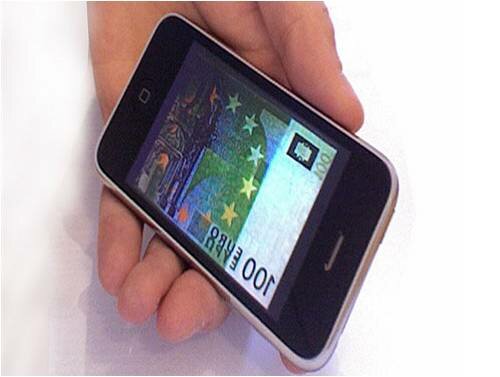
Last month TechTalk published a post about NFC (Near Field Communication) based mobile services becoming adopted among a wider consumer base in 2011. At the time of publishing we highlighted a number of new services and advances being made, from small start-ups to smartphone giants such as Apple, Google and Nokia. Now we’re almost one month into 2011 the news and developments on NFC, in particular mobile payments, continues to hit the headlines in the technology press. Most notably, O2[1] is beefing up their m-payments team ahead of its NFC based mobile payments service launch later this year, whilst Google announced the launch of Android 2.3 OS (Gingerbread)[2], which adds support for NFC.
Tags: Android, Apple, Contactless Payments, iPhone 5, Mobile Pay App, Mobile Payments, Mobile Wallet, Near Field Communication, Network Operators, NFC, Nokia, O2, Smartphones, User Experience, UX
Posted in Mobile Payments | 1 Comment »
11/08/2010 15:28 by Ryan Garner
Recent research conducted by GfK NOP shows that, among smartphone owners, mobile data allowance is more important than the network operator and the handset type.
From previous posts on TechTalk we’ve shown how the use of mobile apps shows no sign of abating and that the tight integration of services on the iPhone drives Apple’s smartphone success. This thirst for apps and services is the reason why smartphone owners are placing greater importance on their mobile data allowance. Smartphone owners now rely on the services their phone provides and taking these away is not an option.
With many UK operators having recently capped their data allowances, smartphone owners will think carefully about their next mobile tariff. GfK NOP estimates that 24 per cent of contract customers using smartphones would actually switch operators if they could get a better mobile data allowance elsewhere.
This is a preview of
Mobile data allowance grows in importance among smartphone owners
.
Read the full post (443 words, 1 image, estimated 1:46 mins reading time)
Tags: Capped Data, Consumer, Handsets, iPhone, Mobile Data Allowance, Mobile Services & Apps, Network Operators, Network Performance, Smartphones
Posted in Mobile Networks | No Comments »
20/07/2010 13:45 by Olly Robinson
Mobile phone users under the age of 16 are extremely sophisticated, with deep brand experiences and preferences. This raises significant questions for network operators, handset manufacturers and service providers regarding how best to engage an increasingly important market segment.

You could be forgiven for a sense of déjà vu. After all, rising mobile phone use amongst children is not a new phenomenon. As long ago as 2004 the Guardian was reporting growth in ownership amongst under-10s, [1] and media coverage concerning potential health concerns can be traced back even further. However, our ever-increasing reliance on, and immersion in, mobile phones and the digital services we use them to access, justify revisiting the topic.
This is a preview of
Connected Kids: the future generation of mobile owners
.
Read the full post (618 words, 1 image, estimated 2:28 mins reading time)
Tags: Children, GfK Research Panels, Handsets, Mobile Marketing, Mobile Services & Apps, Network Operators
Posted in Trends | 1 Comment »
01/06/2010 08:34 by Ryan Garner
Expect to see a vibrant and competitive tablet PC market over the next 12 months as Apple sell 2 million iPads globally in less than 60 days.

Apple certainly knows how to get the media and public excited about their latest creation, the iPad. Everyone is talking about the iPad and tablet PCs and this is not just tech press but also mainstream news bulletins. Apple is extremely proficient at sparking people’s imagination around all the creative ways their products, iPhone and iPad, can be used. Apple’s famous strapline for the iPhone was “there’s an app for that” which creates a powerful perception that anything is possible, and the same applies on the iPad.
This is a preview of
Apple sell 2 million iPads but competition will be fierce in 2010
.
Read the full post (733 words, 2 images, estimated 2:56 mins reading time)
Tags: Android, Apple, Chrome OS, , iPad, iPhone, MeeGo, Microsoft, Netbooks, Network Operators, Nokia, Research, Tablet PC, Windows
Posted in Tablets, PCs & Ereaders | 1 Comment »
25/02/2010 12:59 by Colin Strong
The launch of the Wholesale Applications Community is potentially a substantial challenge from network operators to the dominance of Apple. Managing consumer demand and the consumer experience are likely to be key.

Recent news that 24 leading network operators are launching The Wholesale Applications Community, a mobile apps store which aims to make it easier for developers to build and sell apps “irrespective of device or technology”, begs the question of how consumers will respond.
It’s certainly a tough market for network operators with recent research by GfK Technology showing handset manufacturers dominating the apps market and indeed, a recent report by Gartner gives the somewhat startling statistic that Apple is responsible for 99.4% of mobile apps sales in 2009.
The four key factors that GfK Technology consider to be critical in driving the potential success of this sort of store are:
This is a preview of
Will consumers rise to operators’ high hopes of a Apple App Store challenge?
.
Read the full post (354 words, 1 image, estimated 1:25 mins reading time)
Tags: Apple, iPhone, Mobile Marketing, Network Operators, Wholesale applications community
Posted in Mobile Services & Apps | No Comments »
04/02/2010 16:55 by Colin Strong

Mobile devices continue to be a significant advertising channel according to recent research GfK Technology recently undertook in the UK. The proportion of consumers who had received some form of mobile advertising stood at 47%, fairly consistent with the findings from Q2 ’09. The big shift is perhaps the growth of iPhone as a staggering 84% of iPhone users say they have seen mobile advertising in the last 3 months vs. 45% of all other mobile phone users.
SMS continues to be the dominant form of mobile advertising with 38% of UK consumers receiving at least one in the last quarter. It’s therefore not surprising that network operators are putting significant investment into this area with O2 launching their SMS marketing service, More, in December and Orange partnering a trial with Blyk mid ’09.
Tags: Advertising, Carlsberg, Creative Copy, iPhone, Mobile Advertising, Mobile Marketing, Network Operators, O2, Orange, SMS, Texting
Posted in Mobile Marketing | 3 Comments »