18/11/2010 12:51 by Ryan Garner
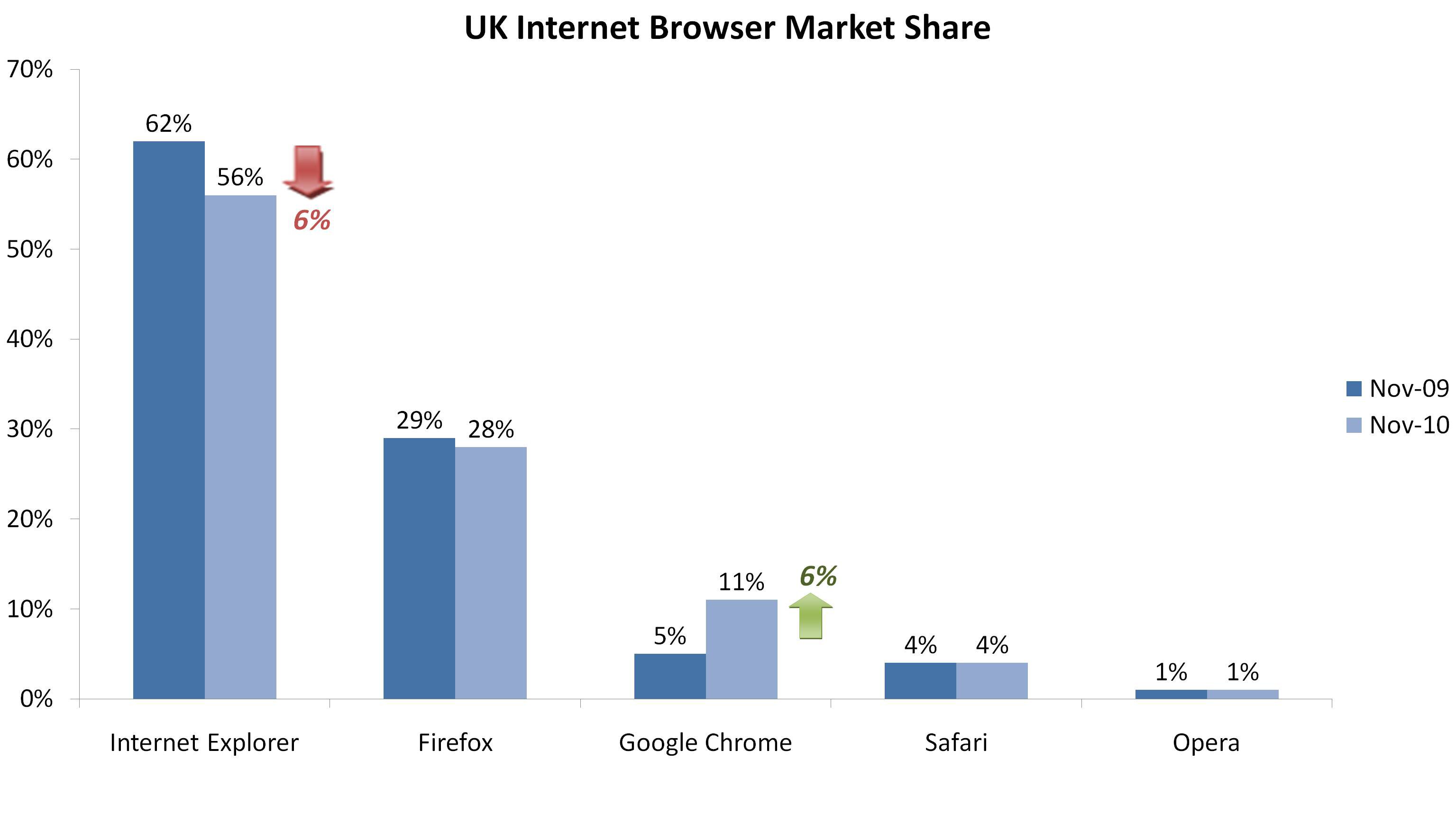
Google has grown their share of the UK internet browser market by 6% year on year; equating to 2.3 million extra consumers who have switched from Microsoft’s Internet Explorer.
Data from the GfK NOP Internet Browser Tracker in the UK shows that market share for all major web browsers has remained static since November 2009, with the exception of Google Chrome and Microsoft’s Internet Explorer. The graphic below shows that Internet Explorer’s lost market share has been Google’s gain:

Back in February 2010 Microsoft were forced to offer a choice of browsers to any consumers using one of their operating systems (i.e. Windows); the so-called ‘browser ballot”. GfK’s data suggests that since then many people in the UK have actually stuck with what they know, resulting in little movement overall. What’s particularly interesting is that Firefox has not been able to grow its market share, with Google capturing those interested in trying something different.
This is a preview of Google Chrome gains an extra 2.3 million users in the UK over the past year
.
Tags: Chrome, Consumer, Firefox, , Internet, Internet Browser, Internet Explorer, Market Share, Opera, Safari, Windows
Posted in Internet Browsers |
15/07/2010 15:03 by Priyesh Patel
Google Chrome continues to muscle its way into the browser market as GfK data for January-June 2010 shows that it has a 7% share of the browser market. In June 2010 alone it accounted for a 9% share which is remarkable considering that it has only been in existence for 2 years.
To highlight the impact that Google Chrome is making we have compared Jan-Jun 2009 data against the same rolling months of 2010.
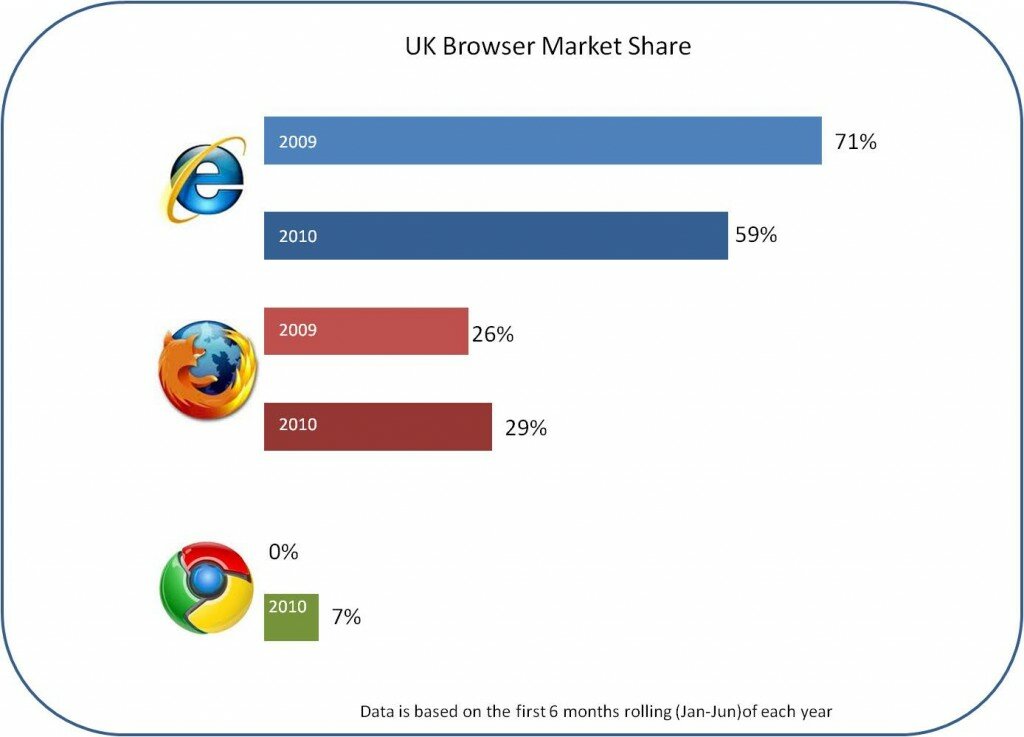
Compared to this time last year Internet Explorer has lost 12% market share while the Chrome and Firefox browsers have gained some ground. The bad publicity around Internet Explorer and its security flaws combined with the EU enforced cannot have done Internet Explorer any favours. Google Chrome is taking full advantage and eating its way into Internet Explorer at a rapid rate and there is no doubt that they want to do the same to Firefox
This is a preview of Google continues the onslaught with Chrome
.
Tags: Chrome, Firefox, Internet Browsers, Internet Explorer, Market Share, Safari
Posted in Internet Browsers |
31/03/2010 13:30 by Priyesh Patel
Users of Google Chrome are young and heavy users of the internet. By attracting this demographic they are best placed to topple Internet Explorer from top spot in the browser wars.
We recently showed that Internet Explorer’s UK market share is being eroded by the recent EU enforced . Mozilla Firefox and Google Chrome are the main beneficiaries as they continue to increase their share of the internet browser market, but where exactly is this growth coming from? We have used the GfK browser data to understand who exactly is using the different browsers and what this all means.
This is a preview of Google Chrome is winning market share from Internet Explorer in areas that will hurt most
.
Tags: Chrome, Demographic, Firefox, , Internet, Internet Browser, Internet Explorer, Market Share, Microsoft, Mozilla
Posted in Internet Browsers |
26/03/2010 12:02 by Ryan Garner
Since Windows introduced a browser ballot at the start of March, GfK Technology research shows that Internet Explorer has lost market share in the UK. Google Chrome and Mozilla Firefox have been the main beneficiaries of this new EU enforced regulation.

It was inevitable that Internet Explorer would lose some of its market share when its users were offered alternative browsers at the start of March. The EU thought it was essential that consumers should be offered a choice of browser, to stimulate competition in the browser market.
 Early data suggests that when faced with an option, UK consumers have opted for an alternative browser. As we approach the end of March we can see that since the beginning of the month Internet Explorer’s market share in the UK has dropped 5%, with Google Chrome and Firefox each gaining an additional 3% market share.
This is a preview of Google Chrome and Firefox gaining ground on Internet Explorer since Windows browser ballot
.
Tags: Apple, Chrome, Consumer, EU, Firefox, , Internet Browser, Internet Explorer, Market Share, Microsoft, Mozilla, Opera, Regulation, Safari, Usage, Windows
Posted in Internet Browsers |