Posts Tagged ‘Consumer’
25/09/2012 13:33 by Fawn Doherty
 With most research focusing on high-involvement product categories (such as cutting-edge products and ‘sexy’ brands), managers of low-involving products often struggle to get their brands noticed; the same rules just don’t apply. This article explores the factors that may influence consumers’ purchase decisions in what could be seen as emotionless product categories. How can marketers begin to re-engage their audiences?
What is a Low-Involvement Product Category?
Some products may not excite all consumers. For example, for me (and I believe a lot of others), insurance and antivirus software aren’t particularly inspiring. When selecting products in categories of little interest, consumers are unlikely to spend time assessing which brand to buy because to them, their final purchase decision is of comparatively little importance. Instead, they may act by habit or simply buy what is top of mind. Their lack of motivation to actively weigh up the pros and cons of the brands means that any actual feelings of like or dislike are often based on subconscious factors.
This is a preview of
Making ‘boring’ product categories appeal to the consumer
.
Read the full post (1145 words, 1 image, estimated 4:35 mins reading time)
Tags: Consumer, consumer choices, Market Research, marketing, product experience, Products, purchase journey, word of mouth
Posted in Gaming, Wider Issues in Tech | No Comments »
How good are consumers at predicting what they will like?
19/04/2012 14:13 by Colin Strong
 I am pretty convinced that the shiny new tablet PC I’ve been playing with in the shop around the corner from work will bring me a lot of satisfaction – just think of all the new things that I will be able to do…..and that new on-demand film service I signed up for at the weekend will make a family film night in easier and more enjoyable. In fact, a lot of the purchase decisions that I make are because I think they will make me happier. Our quest for future happiness seems to figure strongly in many technology purchases where consumers often make pricey investments in the belief that a new device or service will bring them happiness in the future.
This is typically relevant to discretionary purchases but the choices made within even non-discretionary purchases can be for this reason (e.g. by choosing this broadband supplier I will have greater peace of mind = happiness).
This is a preview of How good are consumers at predicting what they will like?
. Read the full post (1293 words, 1 image, estimated 5:10 mins reading time)
Tags: behavioural economics, branding, Consumer, consumer choices, loyalty, psychology, tablet, tablet computer, Tablet PC, technology, technology trends, Trends
Posted in Behavioural Economics | 2 Comments »
29/07/2011 08:45 by Olly Robinson and Alexis Helcmanocki
In June 2009 with the passing of the HADOPI law, France became the first country to use legislation to tackle the issue of piracy in music downloads. The UK Digital Economy Bill, which passed somewhat controversially through Parliament earlier this year and includes provisions for banning illegal file-sharers and blocking websites that infringe copyright laws, is similarly designed to tackle internet piracy through the use of legislation. But how successful is legislation of this nature in reducing music piracy, and more importantly, to what extent does it encourage legal consumption? There seems little evidence so far that they are doing either.

The IFPI (International Federation of the Phonographic Industry) has revealed its analysis of global music consumption in 2010, highlighting an overall drop in physical CD sales of -14.2%, with an increase of only 5.3% in (legal) digital sales during the same period leaving a significant shortfall in revenue for the industry.
This is a preview of
Music Downloading: Is The Law The Answer to Music Piracy?
.
Read the full post (1322 words, 3 images, estimated 5:17 mins reading time)
Tags: BPI, Consumer, Digital Economy Bill, Digital Music, Downloads, IFPI, mp3, Piracy, Public debate, Record Labels
Posted in Digital Music | 3 Comments »
12/05/2011 10:45 by Nick Peppiatt
Near Field Communication (NFC) – the technology that supports close proximity mobile payment services – has been around for many years. However, up until recently, the NFC-enabled mobile devices and service support needed to make such payments a reality have been lacking.
In this video blog, Ryan Garner looks at the barriers to adoption, demonstrating that Trust and Familiarity of supplier brands will drive consumer preference and arguing the need for co-operation between brands from different sectors.
To read the full report, please click here.
To read the report article in the Free TechTalk Magazine, please click here.
Permanent link to this post (97 words, estimated 23 secs reading time)
Tags: Adoption, Android, Appeal, Apple, Banks, Consideration, Consumer, Contactless Payments, Familiarity, , Infographic, Mastercard, Mobile Ecosystems, Mobile Money, Mobile OS, Mobile Pay App, Mobile Payments, Mobile Wallet, Network Operators, NFC, Nokia, PayPal, Preference, Report, Research, RIM, Take-up, Trust, Video, Visa
Posted in Mobile Payments | 2 Comments »
29/03/2011 12:50 by Richard Preedy

Common opinion generally decrees that, in the future, the majority of consumers will be moving to the cloud to obtain broader access to music. While this is almost certainly true, in the fragmented world of consumer music consumption, a ‘collector’ mentality and desire for personal ownership continue to exist amongst many music fans. The music industry needs to ensure these different needs are addressed, rather than assuming a single model will satisfy all consumers.
Vinyl records not affected by the industry downturn?
Over the last few years a pleasing story has continued to appear like clockwork in the press. Amid general doom and gloom and tales of music industry collapse, we are told, somewhat counter-intuitively, that sales of vinyl records are continuing to increase. See the chronologically listed selection of articles below for proof.[1]
This is a preview of
Consumers are moving to the cloud…so why are people still buying vinyl records?
.
Read the full post (1138 words, 1 image, estimated 4:33 mins reading time)
Tags: Amazon, Apple, Cloud, Consumer, Digital Music, Downloads, Records, Spotify, Vinyl
Posted in Digital Music | 6 Comments »
01/03/2011 16:19 by Richard Preedy
Despite a deluge of new device offerings, tablet PCs look unlikely to become mass market this year, meaning individual manufacturers will have to strongly differentiate their products to grab the limited share of the market available. Apple still dominates in consumer minds, but Samsung, Blackberry and other Android devices look set to offer a compelling challenge.

As expected, February’s Mobile World Congress in Barcelona and the CES show in January revealed a surge of new tablet offerings from the major hardware manufacturers, all vying to compete with the success of the ubiquitous Apple iPad.
But while the tablet market is clearly in ascendancy, at present it is still very much nascent and we are unlikely to see the same growth this year as we expect from other categories, such as Smartphones.[i]
2011 tablet market likely to remain niche
This is a preview of
Apple’s iPad2 vs. Android: who are the contenders for 2011 tablet domination?
.
Read the full post (977 words, 2 images, estimated 3:54 mins reading time)
Tags: Android, Android 3, Android Honeycomb, Apple, Blackberry, Consumer, Galaxy Tab, HTC, iPad, iPad2, Market Share, Motorola, MWC, Playbook, Research, RIM, Samsung, Tablet PC, Xoom
Posted in Tablets, PCs & Ereaders | No Comments »
09/02/2011 14:30 by Priyesh Patel
Exciting times lie ahead within the gaming industry and the buying options for new and used games have never been so wide. New game downloads are increasing at great speed and the used game market is strengthening, with Tesco, Asda and Argos all now offering a used game service. All this is great news for ‘gamers’ but the real opportunity is a platform which combines the two: trading online.

Electronic Arts CEO, John Riccitiello, recently claimed that 2011 will be the year revenues from downloadable games overtake the traditional out-of-box experience[i]. Being an avid gamer myself, a statement like this took me by surprise, especially coming from such a senior figure in the gaming industry. I have little doubt that this scenario will eventually happen, but this year?. There are two big reasons for my scepticism. First, the cost of new games – mixed with the widespread availability of cheap second hand games – and, second, limited storage space on consoles when used more widely in the ‘connected home’ rather than just for gaming.
This is a preview of
The gaming industry is moving online but consumer demand for second hand games will always remain strong
.
Read the full post (1265 words, 1 image, estimated 5:04 mins reading time)
Tags: Consumer, Downloads, EA, Games Console, Gaming, Playstation, PS3, Publishers, Research, Retailers, Second-hand games, Video Games, XBOX 360
Posted in Gaming | 2 Comments »
02/02/2011 10:30 by Ryan Garner
Smartphones are competing with dedicated personal navigation devices (PNDs) for market share but recent research shows that PNDs are still preferred for in-car navigation. Smartphones can begin to win more market share by improving their user experience and integrating popular social networking and location based services.

Usage of mobile mapping and navigation services is booming. Almost a year ago Nokia announced that its mobile navigation service, Ovi Maps, would be free with a compatible Nokia handset. In the first week alone the service had been downloaded over 1.4 million times. According to Wikipedia Ovi Maps is now available in 74 countries and in 46 different languages. Similarly, Google now offers its mobile navigation services in 12 countries and it has proved a big hit with Google Android smartphone owners. Consequently, in the space of a couple of years the PND market has changed dramatically, with global in car satellite navigation providers such as TomTom and Garmin facing fresh competition from the all gadget devouring smartphone.
This is a preview of
The trend towards mobile navigation usage will not destroy demand for PNDs… at least not in 2011 anyway
.
Read the full post (725 words, 1 image, estimated 2:54 mins reading time)
Tags: Consumer, , , , LBS, Location, Location Based Services, Mobile Maps, Mobile Navigation, Nokia, Ovi Maps, Personal Navigation Device, PNDs, Sat Nav, TomTom
Posted in Location Based Services | 3 Comments »
14/01/2011 11:17 by Richard Preedy
Our online social networks are a key source of information and increasingly influence what we read, share and buy. However, if we do not filter out the mundane we risk missing the information that is most important to us and becoming a victim of information overload.

It occurred to me the other day that I have too many friends. By this, I don’t mean the family, friends and colleagues I socialise with throughout the week and, you know, actually spend my leisure time with face to face. More, the numerous people sitting on my Facebook account I haven’t spoken to for nigh-on five years, (the occasional shallow digital platitude aside), but who seem intent on breathlessly updating their minute movements on the notice board whenever I (increasingly infrequently) log-in. Back in 2006 when the Facebook really took off, there was something ego-boostingly satisfying about racing to my first 100 friends, but now I find it a little tiring. Do I really need them all?
This is a preview of
Choose your friends carefully: the move to Social Network Curation in 2011
.
Read the full post (983 words, 2 images, estimated 3:56 mins reading time)
Tags: Consumer, , Online Services, Privacy, Research, Social Curation, Social Media, Social Networks,
Posted in Social Media | 7 Comments »
05/01/2011 13:01 by Rachel Hamilton
The television experience is constantly changing and evolving with the increasing number of devices and platforms available to watch video content. This year two of the tech giants, Apple and Google, have seriously entered the market to make the web accessible through your television screen. However, both have very different strategies as the battle over openness and control will play out through your television sets in 2011.
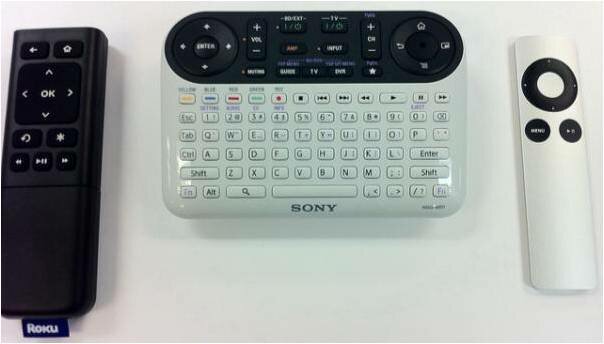
How IPTV has changed in 2010
This is a preview of
In 2010 consumer appetite for IPTV was established. In 2011 a battle for openness, control and content partnerships will define this new technology
.
Read the full post (657 words, 1 image, estimated 2:38 mins reading time)
Tags: Apple, BBC iPlayer, Consumer, Consumer Electronics, , Innovation, Internet, Internet Capable, Internet TVs, IPTV, ITV Player, LCD TVs, Research, TV
Posted in TV (IPTV & 3DTV) | 1 Comment »
Page 1 of 3123»